 Welkom in Europa
GRANADA
BEZIENSWAARDIGHEDEN / HIGHLIGHTS
Bezienswaardigheden / tips Granada 2025:
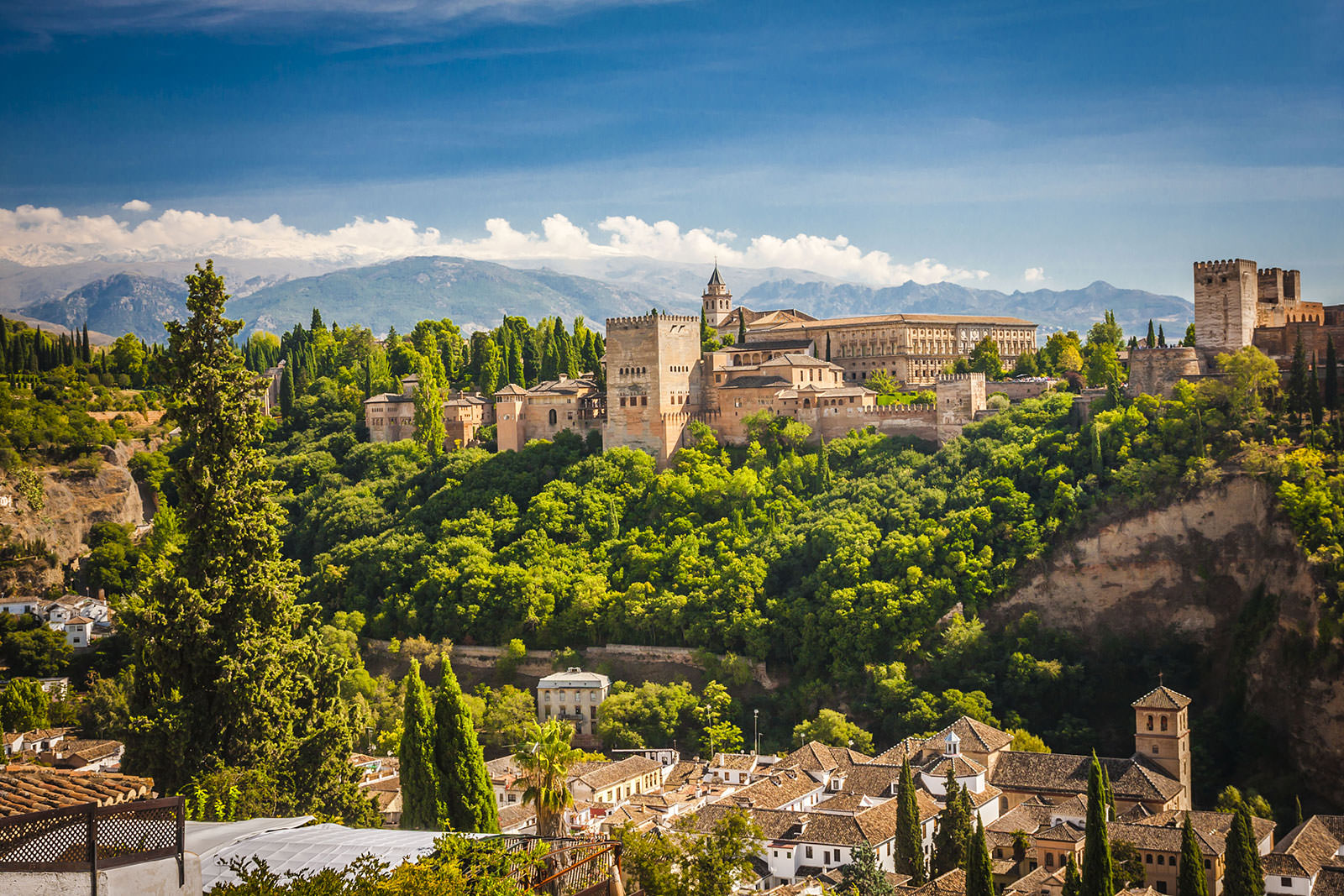
1) Granada: Granada is een betoverende stad, met dank aan haar oriëntaalse verleden. Als laatste bastion van de Moren beleefde de stad onder de dynastie van de Nasriden (1238 - 1492) haar grootste bloeiperiode. Nog altijd geldt het Alhambra, het paleis van de Moorse koningen, als het mooiste voorbeeld van de hoogontwikkelde bouwkunst van dit tijdperk. Als je in Granada arriveert zie je eerst alleen maar hoge betonflats en het chaotische autoverkeer. Ook het Alhambra is in eerste instantie moeilijk te herkennen. Om echt van deze stad te kunnen genieten is een bezoek in het laagseizoen aan te raden. Je kunt dan rustig op je gemak de stad verkennen en constateren dat Granada een van de mooiste steden is maar ook een levendige stad. Je zult dit vooral 's avonds merken, als de plaatselijke studenten zich met overgave in het nachtleven storten. Nergens vindt je dan ook zoveel tapasbars en nachtclubs als in Granada. Uniek is ook de ligging van Granada, tussen de bergen en de zee. Dichtbij liggen het skigebied van de Sierra Nevada en het populaire vakantiegebied Alpujarras, een berglandschap met een woeste charme.
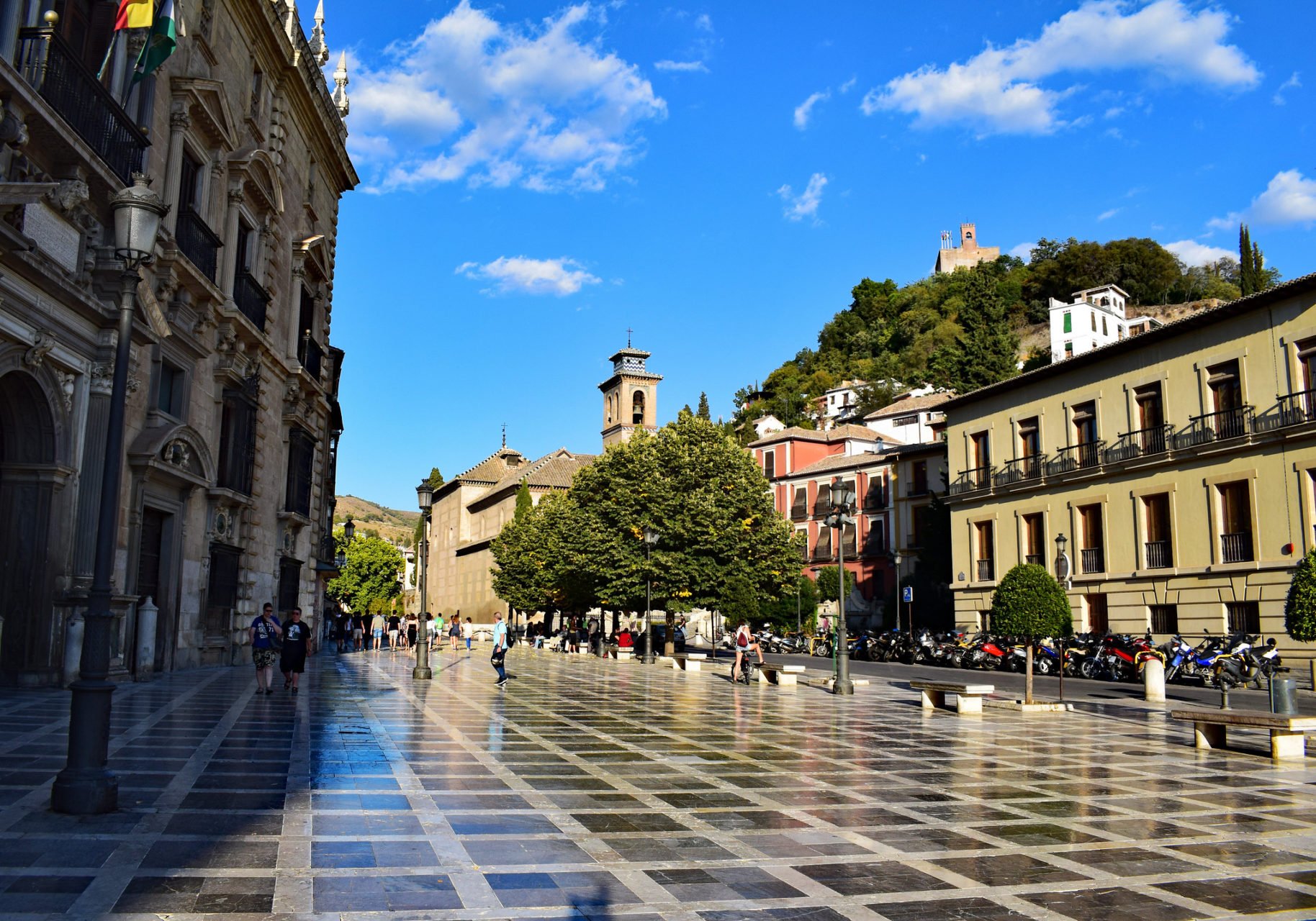
2) De wijk Albaicín: Albaicín is de oude Arabische wijk. Albaicín zelf is onderverdeeld in twee delen, hoog Albaicín en laag Albaicín. Het oude centrum rond de kathedraal bestaat uit een wirwar van straatjes met eenrichtingsverkeer. Het bezit een Alcaicería - reconstructie van de Moorse bazaar die in 1843 afbrandde. De twee hoofdpleinen van de stad zijn het Plaza Bib-Rambla, bij de kathedraal, en het Plaza Nueva. Vanaf Plaza Nueva leidt de Cuesta de Gomérez naar de twee belangrijkste monumenten: het Alhambra en de Generalife. Vanaf paseo de los tristes heb je een prachtig uitzicht op het Alhambra.
3) Alhambra: Het Alhambra is een middeleeuws paleis en fort van de Moorse heersers van het koninkrijk Granada. Het uitgebreide complex werd na de verovering van het koninkrijk Granada in 1492 door het katholieke koningspaar als een zeer belangrijke buit gezien. Hun kleinzoon keizer Karel V gaf na zijn bezoek aan Granada in 1526 opdracht tot de bouw van een renaissancistisch paleis midden in het Alhambra, waarvoor een deel van het Alhambra werd afgebroken. Zijn vrouw droeg er zorg voor dat wat nu rest bleef bestaan. Vanwege de fijn uitgevoerde islamitische kunst en de zeer grote waarde van de kunstschatten, is het een populaire trekpleister voor kunststudenten in Europa. Binnenin zijn er mooie decoraties die toegeschreven worden aan Yusuf I. Veel kunstschatten van het Alhambra zijn gerestureerd en zo een goed voorbeeld van Moorse kunst op het Europese vasteland. Wie het Alhambra wil bezoeken, moet vooral rekening houden met de quota die de UNESCO heeft gesteld qua bezoekersaantallen: per dag mag maar een beperkt aantal bezoekers het Alhambra binnengaan, dus wie op goed geluk een bezoek wil brengen, loopt een groot risico niet toegelaten te worden, en vooraf boeken is verstandig.
4) Generalife: Vanaf de noordzijde van het Alhambra loopt een voetpad naar de Generalife. Het paleis de Generalife was het zomerpaleis en landhuis van de Nasridische sultans van Granada. Hier konden ze zich terugtrekken van het gekonkel aan het hof en hoog boven de stad, iets dichter bij de hemel, van hun rust genieten. De naam Generalife kan op veel manieren worden geduid, maar de mooiste vertaling is: De tuin van het hemelse paradijs. De in de 13de eeuw aangelegde tuinen zijn door de eeuwen heen veranderd. Vroeger bevatten ze boomgaarden en grasvelden. De Generalife vormt het decor voor het jaarlijks muziek en dansfestival. Een combinatie ticket met een bezoek aan het Alhamabra is ook een mogelijkheid. Van te voren een ticket reserveren is aan te raden.
5) Kathedraal: De Kathedraal van Granada, hoofdkerk van het aartsbisdom Granada, is een zeer groot kerkgebouw, hoofdzakelijk uit de renaissancetijd. De kathedraal is 115 meter lang en 67 meter breed. Zij is gewijd aan de Maagd van de Incarnatie. In opdracht van de Katholieke Koningen begonnen de werkzaamheden aan de kathedraal in 1523 naar een ontwerp in gotische stijl van Enrique de Egas. De renaissancemeester Diego de Siloé zette het werk voort. Korinthische zuilen steunen zijn magnifieke, Capilla Mayor. Onder de koepel verbeelden 16de-eeuwse ramen. De passie van Juan del Campo. De west facade is ontworpen door Alonso Cano. In de kathedraal ligt zijn graf. Een toegangsticket kost 7,00 EURO per persoon.

Hightlights / tips Granada 2025:
1) Granada: Granada is an enchanting city, thanks to its oriental past. As the last bastion of the Moors, the city experienced its greatest heyday under the Nasrid dynasty (1238 - 1492). The Alhambra, the palace of the Moorish kings, is still regarded as the most beautiful example of the highly developed architecture of this era. When you arrive first in Granada you only see appartment blocks and chaotic traffic. The Alhambra is also difficult to recognize at first. To really enjoy this city, a visit in the low season is recommended. Then, you can explore the city at your leisure and discover that Granada is one of the most beautiful cities, but also a lively city. You'll notice this especially at night, when the local students throw themselves into the nightlife with devotion. Nowhere else you will find so many tapas bars and nightclubs as in Granada. The location of Granada, between the mountains and the sea, is also unique. Close by are the Sierra Nevada ski resort and the popular Alpujarras holiday area, a mountain landscape with a wild charm.
2) The district of Albaicín: Albaicín is the old Arab quarter. Albaicín itself is divided into two parts, high Albaicín and low Albaicín. The old center around the cathedral consists of a maze of one-way streets. It owns an Alcaicería - reconstruction of the Moorish bazaar that burned down in 1843. The city's two main squares are Plaza Bib-Rambla, near the cathedral, and Plaza Nueva. From Plaza Nueva, the Cuesta de Gomérez leads to the two most important monuments: the Alhambra and the Generalife. From paseo de los tristes you have a beautiful view of the Alhambra.
3) Alhambra: The Alhambra is a medieval palace and fortress of the Moorish rulers of the kingdom of Granada. The extensive complex was considered a very important loot by the Catholic Monarchs after the conquest of the kingdom of Granada in 1492. After his visit to Granada in 1526, their grandson Emperor Charles V ordered the contruction of a Renaissance palace in the middle of the Alhambra, for which part of the Alhambra was demolished. His wife was responsible that the remains continued to exist. Due to the finely executed Islamic art and the great value of its art treasures, it is a popular attraction for art students in Europe. Inside, there are beautiful decorations attributed to Yusuf I. Many of the art treasures of the Alhambra have been restored and are a good example of Moorish art on the European mainland. Who wants to visit the Alhambra, must take account of the quotas that UNESCO has made in terms of numbers of visitors: per day a limited number of visitors may only enter the Alhambra, so who wants to visit on good luck, runs a major risk not allowed, and advance booking is recommended.
4) Generalife: A foothpath leads from the north side of the Alhambra to the Generalife. The Palace de Generalife was the summer palace and mansion of the Nasrid sultans of Granada. Here they could withdraw from the scheming at court and enjoy their peace high above the city, a little closer to the sky. The name Generalife can be interpreted in many ways, but the most beautiful translation is: The garden of the heavenly paradise. The gardens, laid out in the 13th century, have changed over the centuries. They used to contain orchards and lawns. The Generalife is the setting for the annual music and dance festival. A combination ticket with a visit to the Alhambra is also a possibility. It is recommended to book a ticket in advance.
5) Cathedral: The Cathedral of Granada, main church of the Archdiocese of Granada, is a very large church mainly from the Renaissance period. The cathedral is 115 meters long and 67 meters wide. It is dedicated to the Virgin of the Incarnation. Commissioned by the Catholic Monarchs, work on the cathedral began in 1523, based on a Gothic-style design by Enrique de Egas. The Renaissance master Diego de Siloé continued the work. Corinthian columns support its magnificent, Capilla Mayor. Below the dome depict 16th-century windows. The passion of Juan del Campo. The west facade was designed by Alonso Cano. His grave is located in the cathedral. An entrance ticket costs 7.00 EURO per person.
.jpg)
.jpg)
Granada werd in de 8ste eeuw door de Moren bezet en beleefde zijn bloeiperiode onder de heerschappij van de Nasriden van 1238 tot 1492, toen ambachtslieden, kooplieden en geleerden in gelijke mate bijdroegen tot de roem van de stad als centrum van cultuur.
Granada was occupied by the Moors in the 8th century and had its heyday under the rule of the Nasrid dynasty from 1238 to 1492, when craftsmen, merchants and scholars contributed equally to the city's fame as a center of culture.
.jpg)
.jpg)
Nadat Granada in 1492 in handen was gevallen van de Katholieke Koningen en de Moren waren verdreven, ontwikkelde de stad zich onder christelijke heerschappij tot een middelpunt van de renaissance.
After Granada fell into the hands of the Catholic Monarchs in 1492 the Moors were expelled, the city developed under Christian rule into a centerpiece of the Renaissance.
.jpg)
.jpg)
.jpg)
Na een periode van verval in de 19de eeuw staat Granada opnieuw in de belangstelling.
After a period of decline in the 19th century, Granada is once again in the spotlight.
.jpg)
.jpg)
Karel de V gaf na zijn bezoek aan Granada in 1526 opdracht tot de bouw van een renaissancitisch paleis midden in het Alhambra, waarvoor een deel van het Alhambra werd afgebroken.
Charles the V gave after visiting Granada in 1526 order for the construction of a renaissancitisch Palace in the center of Alhambra, for which a part of the Alhambra was demolished.
.jpg)
.jpg)
Het Alhambra is een middeleeuws paleis en fort van de Moorse heersers van het Koninkrijk Granada. Het bevindt zich op een heuvel aan de zuidoostelijke grens van de stad Granada.
The Alhambra is a medieval palace and fortress of the Moorish rulers of the Kingdom of Granada. It is located on a hill on the South Eastern border of the city of Granada.
.jpg)
.jpg)
De Torre de corrares in het Alhambra.
.jpg)
.jpg)
Het paleis van de Nasriden, het hoofdcomplex van het Alhambra, stamt uit de vroege 14e eeuw. Het is een typisch islamitisch paleis met een rechtszaal openbare vergaderzalen, het koninklijk paleis en vrouwenvertrekken.
The Palace of the Nasrid dynasty, the main complex of the Alhambra, dates from the early 14th century.It is a typical Islamic Palace with a courtroom, public meeting rooms, the Royal Palace and women leave.
.jpg)
.jpg)
Aan de vier belangrijkste binnenplaatsen en de architectuur van de tussenliggende gebouwen is ook nu nog het Moorse tuinensysteem te herkennen. Hier op de foto de Patio de Arrayanes, deze vijver tussen hagen en sierlijke arcaden reflecteert het licht in de omliggende zalen.
The four main courtyards and the architecture of the intermediate buildings is even now recognized as the Moorish gardens system. Here in the photo the Patio de Arrayanes, this pond between hedges and graceful arcades reflects the light into the surrounding rooms.
.jpg)
.jpg)
Salón de Embajadores, op het plafond van deze tussen 1334 en 1354 gebouwde troonzaal prijken de zeven hemels van de moslim kosmos.
Salón de Embajadores, the ceiling of this throne room built between 1334 and 1354 shows the secen heavens of the Muslim cosmos.
.jpg)
.jpg)
De binnentuin.
The courtyard.
.jpg)
.jpg)
Helaas ontbreekt de beplanting op de tot de harem behorende Leeuwenhof met zijn indrukwekkende Leeuwenfontein, waaraan in 1377 onder Mohammed V werd begonnen. De patio wordt omringd door 124 zuilen. De fontein rust op 12 marmeren leeuwen.
Unfortunately the planting in the patio is missing but has an impressive Lion fountain, an associated harem which was started in 1377 under Mohammed V. The patio is surrounded by 124 columns. The fountain is resting on 12 marble lions.
.jpg)
.jpg)
Palacio del Partal, een paviljoen een portico met bogen en een toren zijn alles wat rest van dit paleis, het oudste gebouw in het Alhambra.
Palacio del Partal, a pavilion, a portico with arches and a tower are all that remains of this palace, the oldest building in the Alhambra.
@MK
